
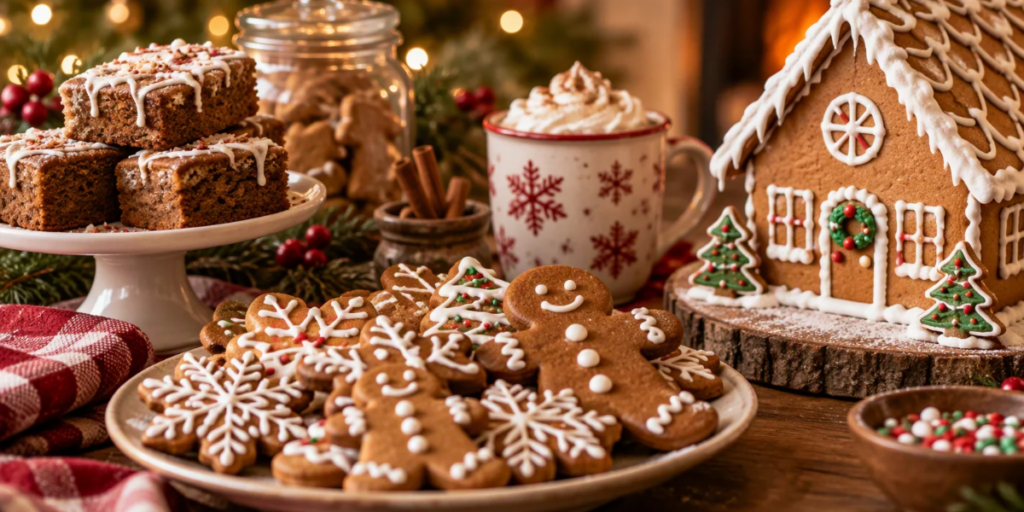
The history of gingerbread stretches back centuries, long before it became a holiday tradition. Early versions were made by combining honey, grains, and spices to create sweet cakes for ceremonies and special occasions. As ginger and other spices like cinnamon, cloves, nutmeg, and pepper made their way to Europe through trade routes from Asia, their high cost made spiced foods something special.
By the Middle Ages, gingerbread had evolved into many forms across Europe. It was baked into cakes, pressed into carved molds, and shaped into people and animals. Often sold at fairs and markets, gingerbread became a popular treat for festivals and celebrations. Today, it remains a seasonal favorite in bakeries, from decorated cookies to holiday desserts made with a variety of baking ingredients and products.
Medieval Bakers Turned Gingerbread into an Edible Craft
In parts of Europe, gingerbread baking became a skilled trade. Local bakers developed unique recipes and passed down their methods. Honey, flour or breadcrumbs, and spices were common ingredients, but the texture and flavor changed from region to region.
Popular European gingerbread traditions included:
- Germany: Lebkuchen, a soft or firm spiced cookie that may include nuts, citrus peel, or icing.
- France: Pain d’épices, a honey-sweetened spice bread with a tender, cake-like texture.
- The Netherlands and Belgium: Speculaas or speculoos, thin molded cookies flavored with warm spices.
- England: Molded or cut gingerbread figures sold at fairs and celebrations.
These regional styles helped gingerbread become more than one recipe. It became a family of baked goods that could be soft, crisp, simple, heavily decorated, or shaped for a special event.
Decorated Gingerbread Became a Sign of Celebration
Gingerbread’s firm dough made it easy for bakers to get creative. It could be rolled, cut, stamped, or pressed into molds, then decorated with icing, dried fruit, nuts, and colored sugar. The finished treats often had a special meaning, whether they were made for a wedding, a local celebration, a fair, or simply given as a gift.
Gingerbread figures also became popular throughout Europe. Queen Elizabeth I is often associated with the tradition of decorating gingerbread figures to resemble guests at her court. While the exact details of the story are debated, shaping gingerbread into people had already become part of European baking traditions. Over time, those decorated figures developed into the familiar gingerbread person associated with the holidays.
The History of Gingerbread and the Rise of the Gingerbread House
Gingerbread houses are most closely associated with Germany. Bakers had long shaped gingerbread into buildings and detailed scenes. The custom became even more popular in the 1800s, when the Brothers Grimm published the tale of “Hansel and Gretel.” In the story, two children discover a house made with bread and sweets.
The fairy tale did not create gingerbread architecture by itself, but it helped make the candy-covered house famous. Families and professional bakers began building decorative houses for winter displays. German immigrants later brought gingerbread recipes and holiday customs to North America, where gingerbread houses became a popular Christmas activity.
Why Gingerbread Became Part of Christmas and the Holidays
Several practical and cultural reasons helped gingerbread become a winter tradition:
- Warming spices fit cold weather. Ginger, cinnamon, cloves, and nutmeg have bold aromas that feel especially welcome during winter.
- Many gingerbread recipes keep well. Crisp cookies and sturdy house pieces can be baked ahead, stored, displayed, or given as gifts.
- The dough is easy to shape. Stars, trees, people, snowflakes, and houses turn a baked product into holiday décor.
- Decorating brings people together. Families can share icing, candies, and creative ideas around one table.
- The aroma creates strong memories. The smell of molasses and spice can remind customers of childhood kitchens and yearly traditions.
Christmas markets also strengthened the connection. Seasonal markets across Europe offered spiced cookies, breads, ornaments, and gifts. Gingerbread fit all four roles: it was something to eat, display, share, and take home.
Gingerbread Changed as It Traveled
When gingerbread recipes crossed borders, bakers adapted them to local ingredients. In Britain and North America, molasses became a common sweetener and gave gingerbread a deep color and rich flavor. Some bakers made soft gingerbread cakes, while others preferred crisp cookies for cutting and decorating.
Today, you may offer gingerbread people, sandwich cookies, iced ornaments, loaf cakes, cupcakes, house kits, and large display pieces. Gingerbread also lends itself well to holiday bakery gifts and kits, giving you another way to use seasonal items they may already be making. Gingerbread can feature traditional spices or be paired with flavors like chocolate, citrus, caramel, coffee, and cream cheese. No matter the combination, it remains a familiar favorite during the holiday season.
How You Can Keep the Tradition Alive Today
For bakery customers, gingerbread is both a familiar flavor and a hands-on holiday activity. A decorated cookie can be a small gift. A gingerbread house kit can become a family event. A spiced loaf can make breakfast or dessert feel festive without requiring extra preparation at home.
You can celebrate the tradition by offering a mix of ready-to-eat products and decorating options. Clear labels can also help customers choose between soft gingerbread, crisp cookies, and sturdy house pieces. Sharing the story behind the product adds meaning and helps each purchase feel connected to generations of bakers.
Gingerbread Connects History, Baking, and Holiday Memories
The History of Gingerbread shows how a simple spiced cake became a lasting holiday tradition. Over the centuries, gingerbread has evolved through different recipes, decorating styles, and family traditions. Today, it remains a favorite in bakeries and homes, bringing people together through seasonal baking and decorating..

Whether you’re making classic gingerbread cookies or trying something new, we have the ingredients and products to help make the holiday season a success. Want to add gingerbread treats to your holiday lineup? Contact your Account Manager today!