
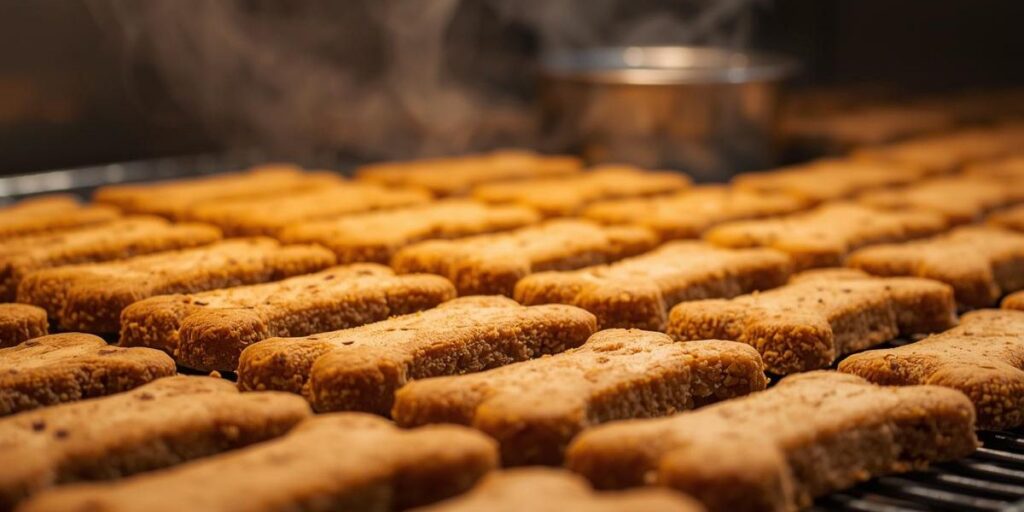
Baking homemade dog treats is a simple way a bakery can expand its product lineup while tapping into an entirely new customer opportunity: pets. If you’re wondering whether dog treats belong in your bakery, the short answer is yes! When done safely and thoughtfully, they can become a profitable extension of your brand without cannibalizing existing sales.
Why Bakeries Are Well‑Positioned to Offer Dog Treats
Bakeries already have the skills, equipment, and ingredient knowledge needed to succeed with pet treats.
Offering dog treats allows you to:
- Increase average order value with an easy add‑on
- Attract new foot traffic from pet owners
- Strengthen emotional loyalty by showing customers you care about their entire family
- Introduce a new product category without competing against your core baked goods
Because dog treats are for a different “customer” entirely, they expand your reach rather than split it.
Prioritizing Safety When Baking Dog Treats
Safety is non‑negotiable when introducing pet products. Dogs metabolize food differently than humans, so ingredients that are harmless to people can be dangerous, or even fatal, for pets.
Ingredients to Always Avoid
When baking dog treats, never use:
- Xylitol
- Chocolate
- Onions
- Garlic
- Raisins
- Grapes
These ingredients should be strictly excluded from your pet‑treat recipes and production area. Clear internal guidelines and recipe documentation help prevent cross‑contamination and mistakes.
Bake Pet Treats with Simple, Dog‑Friendly Ingredients
One of the advantages of baking homemade dog treats is that dogs don’t need complicated flavors or sweeteners. Simple, whole ingredients are not only safer—they’re also easier to explain to customers.
Recommended Core Ingredients
Focus on a short, recognizable ingredient list such as:
- Oat flour
- Pumpkin (plain, unsweetened)
- Peanut butter (xylitol‑free)
- Eggs
Salt and sugar should be kept to an absolute minimum or eliminated entirely. Many pet owners actively look for clean, limited‑ingredient options, making this a strong selling point.
Proper Baking and Storage Best Practices
Unlike commercially manufactured dog treats, bakery‑made pet treats typically do not contain preservatives. That means preparation and storage matter.
Baking Guidelines
- Treats should be thoroughly baked until crunchy and well done
- Nothing should be raw or soft in the center
- A crisp texture helps extend shelf life and reduce spoilage risk
Storage Recommendations
Because of the lack of preservatives:
- Store treats in airtight packaging
- Typical shelf life when refrigerated is 5-7 days
- Typical shelf life when frozen is 2 months
Clearly labeling storage instructions builds trust and helps customers use the product safely.
Sizing and Portion Control Matter
When it comes to dog treats, smaller is better. Treats are meant to supplement a dog’s diet—not replace meals.
- Smaller treats help manage calorie intake
- Bite‑sized pieces are suitable for dogs of all sizes
- Customers can give multiple rewards without overfeeding
Uniform shapes and sizes also improve consistency, packaging, and visual appeal on display.
Baking Homemade Dog Treats as a Smart Sales Strategy
Introducing dog treats isn’t just about the product; it’s about the relationship with your customer.
When you offer pet treats, you:
- Create a new reason for customers to visit more often
- Add an impulse purchase that pairs naturally with your other offerings
- Show that your bakery values pets as part of the family
Baking homemade dog treats allows your bakery to tell a broader story: you care about quality, safety, and the everyday moments that matter to your customers, including the ones shared with their dogs.
How to Position Dog Treats in Your Bakery
For best results:
- Merchandise treats near checkout for easy add‑on sales
- Use clear signage that highlights “bakery‑made” and “limited ingredients”
- Educate staff so they can confidently answer ingredient and storage questions
Pet owners are often highly engaged and loyal shoppers. When they trust you with their dog’s treats, that trust extends to everything else you sell.
Regulatory Reality in Wisconsin
An important, and often surprising, distinction for Wisconsin bakeries is that dog treats are not regulated as human food. In Wisconsin, dog treats are legally classified as “commercial feed” under Wis. Stat. § 94.72 and Wis. Admin. Code ATCP 42, and they are regulated by the Wisconsin Department of Agriculture, Trade and Consumer Protection (DATCP) through its Commercial Feed Program, not by the Food Safety or Retail Food Program that inspects bakeries. In other words, even if dog treats are made with human‑grade ingredients and baked in a retail bakery, they fall under a completely separate regulatory framework. [datcp.wi.gov]
Because of this classification, a bakery’s existing food license does not automatically cover dog treats. A bakery that chooses to sell dog treats is effectively operating two regulated businesses within one facility, one for human food regulated by the local health department, and one for animal food regulated by DATCP. This typically requires a separate commercial feed license, compliance with animal food labeling rules, and adherence to animal food manufacturing standards, even though the products may look nearly identical to human baked goods. [datcp.wi.gov], [aafco.org]
The good news is that Wisconsin does allow bakeries to produce both human food and dog treats in the same location, as long as compliance is clearly separated. Regulators generally expect distinct production controls such as dedicated production times, thorough cleaning between runs, accurate pet‑specific labeling, and clear internal procedures to prevent cross‑contamination or consumer confusion. Understanding this regulatory reality early can help bakeries expand into dog treats confidently, without unexpected compliance issues down the road.

Takeaway
Adding dog treats is one of the easiest ways to diversify your offerings without increasing operational risk. With safe ingredients, proper baking, and thoughtful storage, baking homemade dog treats can become a profitable, feel‑good product that strengthens customer loyalty and opens the door to new sales.
By caring for your customers’ fur babies as much as you care for them, your bakery positions itself as more than a place to buy bread or pastries—it becomes part of their everyday life.
Find out more about making Valley your go-to supplier for clean-label ingredients perfect for baking homemade dog treats.